
Holiday light hanging and removal: a guide for Salt Lake homeowners
How to plan your display, hang lights without damaging the roof or gutters, keep the power side safe, and take everything down in one piece.

Holiday lights are one of the best parts of a Salt Lake winter. They are also one of the few times a year most of us climb a ladder in the cold, plug a dozen strands into one outdoor outlet, and leave it all running through snow and freezing rain for weeks.
A little planning makes the whole thing safer and easier, both going up and coming down. Here is how we would approach it.
Key takeaways
- Hang lights on a dry, mild day in early or mid November, before snow sticks to the roof and the gutters freeze.
- Use lights and cords rated for outdoor use and marked by a testing lab such as UL or ETL, and plug them into an outlet with GFCI protection.
- Test every strand on the floor before it goes up, and stay under the number of strands the label says can be connected end to end.
- Use plastic gutter clips and shingle tabs. Nails, screws and staples let water in and can damage wiring.
- Unclip lights when taking them down instead of pulling them off the roof edge, and store each strand wound and labeled.
Hang them before the cold sets in
The easiest time to hang lights is a dry, mild day in early or mid November, before snow starts sticking to the roof and the gutters freeze. You do not have to turn them on right away. Getting them up while the ladder footing is dry and your fingers still work makes a big difference.
The same idea applies to removal. Pick a dry day after the holidays when the clips and gutters are free of ice, instead of pulling lights off a frozen roof edge.
Plan the display and the power
Before you buy anything, walk around the house and decide where the lights will go. Measure the roofline, windows, railings and any trees or bushes you want to wrap, and add a little extra for the run down to the outlet.
Then think about power. Every display has to plug in somewhere, and that is where most of the safety questions come up.
- Use lights and extension cords rated for outdoor use. The packaging and the tag on the cord should say so, and should carry a mark from a recognized testing lab such as UL or ETL.
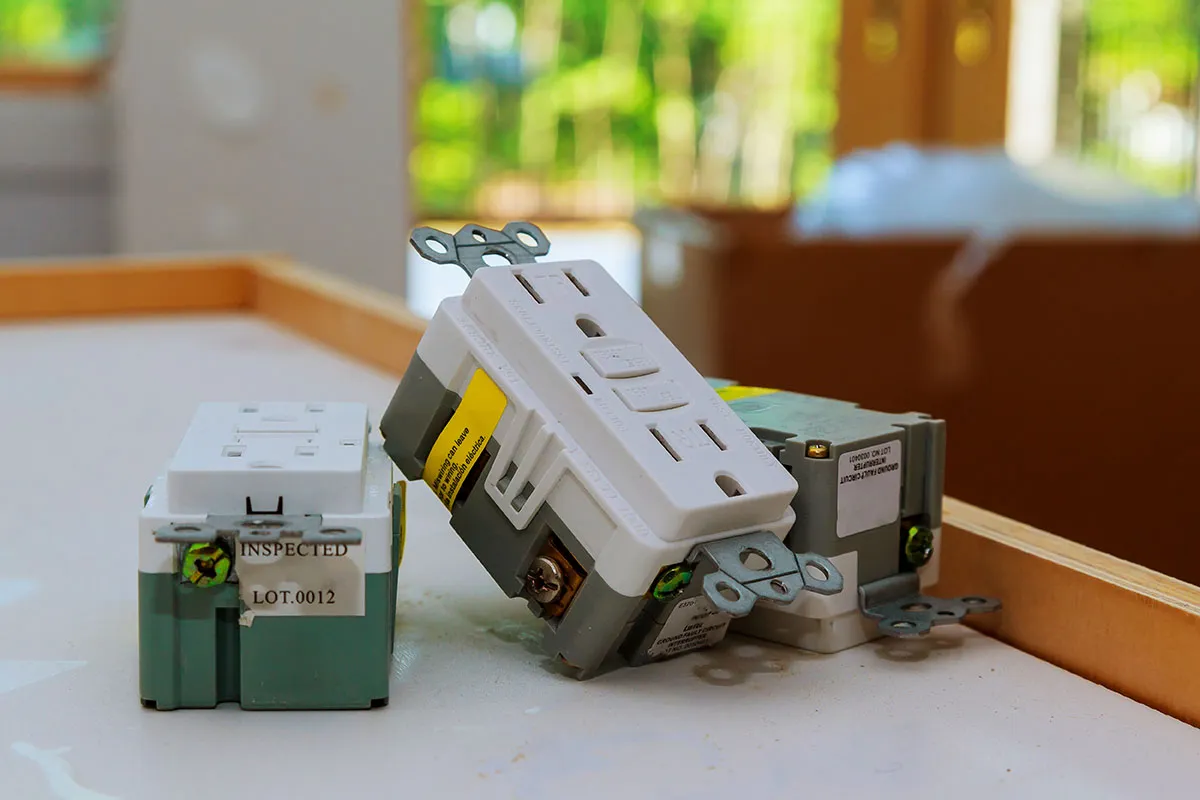
- Plug outdoor lights into an outlet with GFCI protection. A GFCI cuts the power if it senses current leaking where it should not, such as through water. Most newer homes have GFCI outlets outside, but older homes may not.
- Check the label for how many strands can be connected end to end, and stay under it.
- Do not run cords through windows or doors where they can be pinched, and keep connections off the ground, out of puddles and out of snowbanks. Covered outdoor connection boxes help.
- A timer saves you from remembering to switch the lights off every night.
LED lights use much less electricity than older incandescent strands and run cooler, which makes it easier to stay within the limits of a single circuit.
If your outdoor outlet trips every time it rains, does not hold a plug firmly, or does not have GFCI protection, have it looked at before the season starts. Our GFCI outlet installation and outlet replacement services cover both.
| Item | What to check |
|---|---|
| Lights and extension cords | Rated for outdoor use, with a UL or ETL mark |
| Outdoor outlet | Has GFCI protection, holds a plug firmly, does not trip in the rain |
| Strands connected end to end | Stay under the number on the label |
| Connections | Off the ground, out of puddles and snowbanks, ideally in a covered box |
| Cords | Not pinched in windows or doors |
| Timer | Switches the display off overnight |
Check every strand first
Lay each strand out on the floor and plug it in before it goes up. Look for cracked or empty sockets, frayed or pinched wires, and loose plugs. Replace bulbs that are out and throw away any strand with damaged wiring. It is much easier to find a problem on the living room floor than at the top of a ladder.
Hang lights without damaging the house
The roofline is where most lights go, and it is also where most damage happens.
Use plastic light clips made for gutters and shingles. Gutter clips hook onto the lip of the gutter, and shingle tabs slide under the edge of a shingle without lifting it far enough to break the seal. Avoid nails, screws and staples. They put holes in trim and roofing that let water in, and a staple through a wire is a shock and fire risk.
Do not hang heavy displays from the gutters. Gutters are built to carry water, and in a Salt Lake winter they may already be carrying snow and ice. If your gutters are loose or sagging, fix that first. Our gutter maintenance service can reset hangers and tighten things up, and a fall gutter cleaning clears out leaves before lights go on top.
For bushes and trees, wrap lights loosely so they do not cut into branches as the plant moves in the wind.
Ladder safety in winter
Falls from ladders are the biggest risk in this job, and cold weather adds ice, wind and stiff hands to the mix.
- Set the ladder on firm, level, dry ground, never on ice or packed snow.
- Use a ladder stabilizer so the ladder does not rest on the gutter.
- Keep your hips between the rails and move the ladder instead of reaching to the side.
- Have someone hold the base and hand up lights and clips.
- Use a fiberglass or wood ladder near any electrical lines, and keep well clear of the power lines running to the house.
If the roof is steep, two stories up, or covered in snow, that part of the display is worth handing off.
Taking lights down
Removal is where most strands get damaged. Unclip lights rather than pulling them off the roof edge, which can break clips, bend gutters and tear shingle tabs.
Wind each strand around a reel, a piece of cardboard or a coffee can as it comes down, so it does not tangle. Label each one by where it went, such as front roofline or porch railing, and next year's setup will go faster. Store everything in a dry bin indoors, away from mice and damp.
Before you put the ladder away, take a quick look at the gutters and roof edge. If clips have left loose shingle tabs or a gutter has pulled away from the house, it is easier to fix now than after the spring storms. Our minor roof repair page covers that kind of fix.
Frequently asked questions
When is the best time to hang holiday lights in Salt Lake?
A dry, mild day in early or mid November, before snow starts sticking to the roof and the gutters freeze. You do not have to switch them on right away.
Do outdoor holiday lights need a GFCI outlet?
Yes, plug them into an outlet with GFCI protection. A GFCI cuts the power if current leaks where it should not, such as through water.
How do I hang lights without damaging my roof or gutters?
Use plastic gutter clips and shingle tabs, and avoid nails, screws and staples. Do not hang heavy displays from the gutters.
How many light strands can I connect together?
Check the label on the strand, which says how many can be connected end to end, and stay under it. LED strands use much less power than older incandescent ones.
What is the safest way to take holiday lights down?
Pick a dry day when the clips and gutters are free of ice, and unclip each strand rather than pulling it off the roof edge. Wind and label each strand as it comes down.
Need a hand
If you would like help getting your outdoor outlets, gutters and roofline ready for the season, use the Book Now button or call us at (801) 893-6756, Monday to Saturday, 8am to 6pm.

Tim Leary, the visionary entrepreneur behind 'Handy's.' With a solid background in residential real estate spanning 7 years and continuing, Tim has witnessed firsthand the gaps in reliability and trust within the industry.